Palermo: A City That Rewards Walking
Few cities in Europe pack as much history into as small a space as Palermo's old town. The Arabs built here, the Normans rebuilt, the Spanish piled Baroque on top, and the result is a city that changes character every few streets — from a soaring cathedral to a chaotic market to a golden-mosaic royal chapel within the same half-hour walk. Getting your bearings alone takes time. A guided tour shortens the learning curve and fills in the context that makes the monuments make sense.
Coming from the coast? Palermo is easily reached on a day trip from Cefalù — about 45 minutes by train — and our day trips from Palermo guide covers where to venture beyond the city itself.
Most-booked option: From $40 — Palermo: UNESCO World Heritage Sites Guided Walking Tour. A 3-hour small-group walk covering the Cathedral, Piazza Pretoria and Palazzo Pretorio, with an optional add-on to visit the Norman Palace and Palatine Chapel inside.
What you'll see
The Cathedral
An extraordinary architectural collage reworked over centuries — Norman arches, Gothic additions, an 18th-century Baroque dome — that tells Palermo's whole story in one building. The exterior is best read as a timeline; the interior contains the royal tombs of the Norman and Hohenstaufen kings. Most walking tours stop here to explain what you're looking at, because the mix of styles looks contradictory until someone explains the history.
The Palatine Chapel & Norman Palace
The royal chapel of Sicily's Norman kings is one of the great sights of the Mediterranean — its walls sheathed in gold Byzantine mosaics beneath a carved Arabic wooden ceiling, the two traditions pressed together with breathtaking effect. The wider Palazzo dei Normanni complex houses the regional parliament and the chapel itself, which requires a ticket and ideally a guide to appreciate fully. Some walking tours include a chapel visit; others cover the palace exterior and recommend booking separately.
Quattro Canti & Piazza Pretoria
The Baroque heart of the old town: four curved corner buildings marking the central crossroads of the city, and just steps away, the theatrical "Fountain of Shame" in Piazza Pretoria — a ring of large marble statues that scandalised the 16th century and still dominates the square today. Good walking tours use these two sites to explain how the Spanish transformed a Norman and Arab city into a Baroque capital.
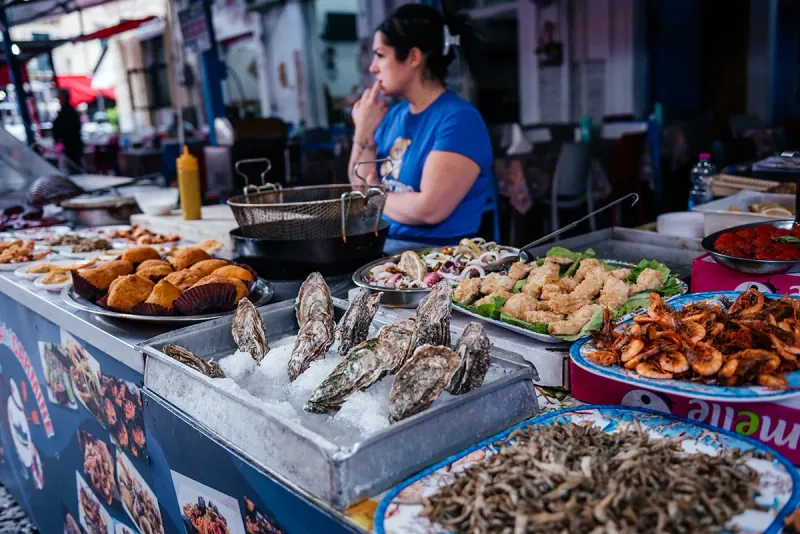
The street markets
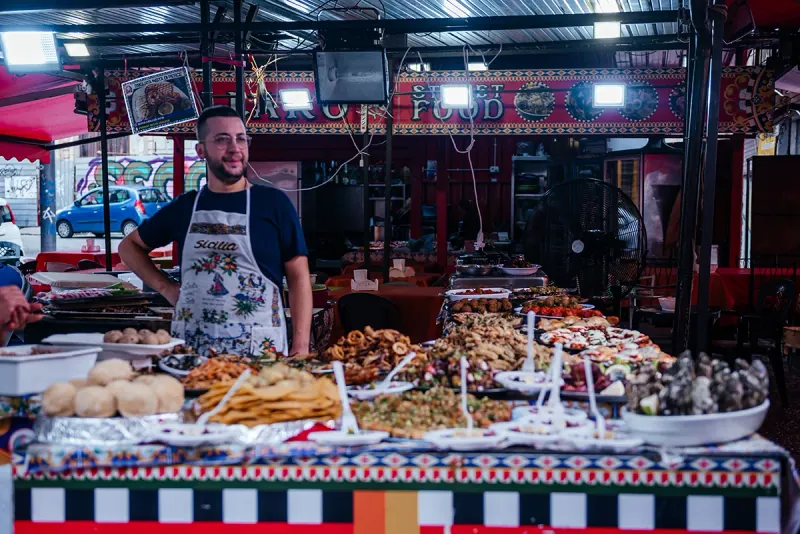
Ballarò, Vucciria, and Capo — ancient, chaotic, and alive in a way that modern markets rarely manage. Most walking tours pass through at least one; the vendors, the smells, and the noise make them as much theatre as shopping. For a deeper experience, our Palermo street food tour makes the markets the main event, eating through them stop by stop with a local guide.
Teatro Massimo
One of the largest opera houses in Europe and a symbol of Palermo's cultural identity — imposing on its own terms and made famous internationally by the closing scene of The Godfather Part III. Walking tours typically pass by; guided interior tours run separately if you want to go inside.
More ways to explore Palermo and Sicily
A walking tour is the ideal first morning in Palermo. Travellers here often follow it with a Palermo street food tour through the markets, a day excursion combining the Norman Palace and Palatine Chapel, or a short train ride to Cefalù for a coastal afternoon. Browse live prices and availability for guided tours in and around Palermo below.
Free walking tours vs. private guides
Free (tip-based) walking tours are a great budget introduction, covering the main monuments and squares in a group. They're popular, so check times and arrive early.
Private and small-group tours cost more but tailor the route, move at your pace, and can include interiors like the Palatine Chapel with proper context. Better if you're short on time or want to go deep on the history — the Arab-Norman-Byzantine cultural mix that makes Palermo so distinctive benefits from a guide who can explain it as you go.
Good to know
- Comfortable shoes — the old town is cobblestones and uneven paving throughout.
- Dress code: Cover shoulders and knees for the Cathedral and the Palatine Chapel.
- Timing: Morning is cooler and the markets are liveliest; summer afternoons are hot and humid.
- Duration: Old-town walking tours generally run two to three hours.
- Palatine Chapel tickets: Buy or book ahead — queues can be long in season, and some tours include skip-the-line entry.
Pair it with
A walking tour and a food tour together are the ideal introduction to Palermo. Follow the monuments with a Palermo street food tour through the markets. Based on the coast? Palermo is an easy day trip from Cefalù — about 45 minutes by train — and our day trips from Palermo guide covers the wider region: Monreale, Cefalù, and beyond. For a broader picture of what to do across the island, see our Sicily tours overview.
Frequently asked questions
How long is a Palermo walking tour?
Most old-town walking tours run two to three hours, covering the Cathedral, the Baroque squares, and at least one street market.
Is there a free walking tour in Palermo?
Yes — tip-based free walking tours operate in Palermo, covering the main monuments and squares in a group. They're popular, so check the schedule and arrive early.
What are the must-see sights on a Palermo walking tour?
The Cathedral, the Palatine Chapel inside the Norman Palace, Quattro Canti and Piazza Pretoria, Teatro Massimo, and at least one of the historic markets — Ballarò, Vucciria, or Capo.
Should I do a walking tour or a food tour in Palermo?
Ideally both — a walking tour for the monuments and history, a food tour for the markets and Sicilian street food. They complement each other and together make a great first day. See our Palermo street food tour guide for the full picture on what to eat and where.